
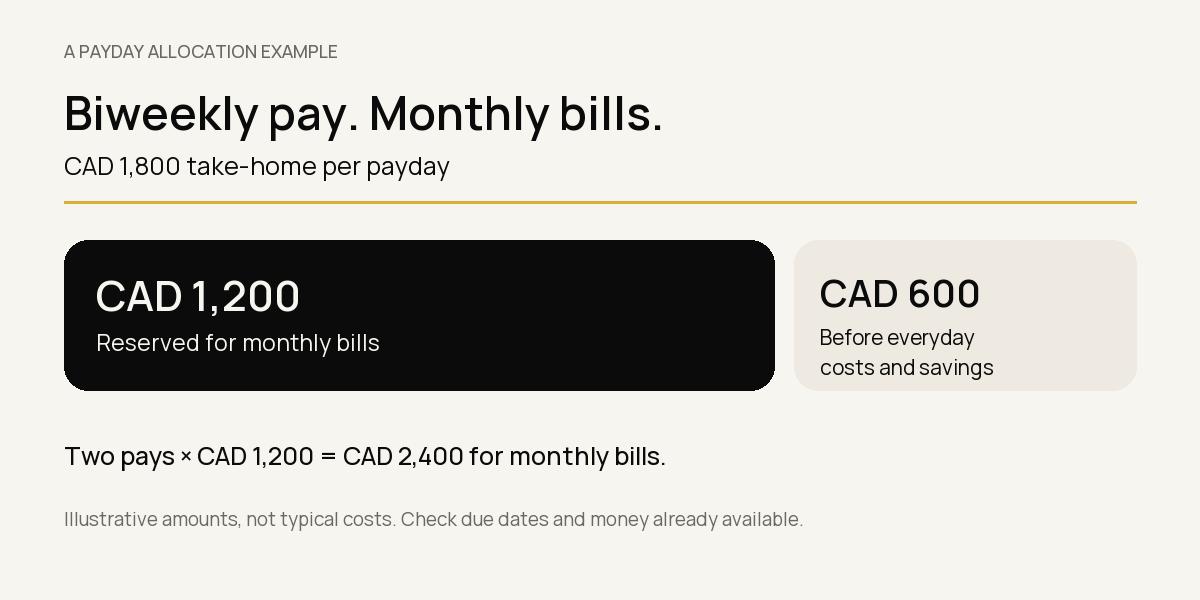
If you are paid every two weeks, start by treating an ordinary month as two take-home paycheques. Add up the monthly bills you need to cover, then reserve half of that amount from each of those two pays. The reserved money is already spoken for, even if the bill is due later. This gives you a clear answer to “how much should I set aside?” while leaving room to plan groceries, transport and other needs separately.
This is a starting method, not a promise that every budget will balance. If the amount left after bills cannot cover essentials, changing the way you divide a paycheque will not create more income. Seeing that gap clearly can help you decide which costs or due dates to review and where to seek support.
First, check what “biweekly” means on your pay stub
Biweekly means one paycheque every two weeks, typically 26 payments in a year. Twice monthly means two payments each month, typically 24 in a year. The difference matters because biweekly pay creates two months with a third paycheque in a typical year. Confirm your actual pay dates with your employer or payroll calendar; holidays and payroll arrangements can affect when money reaches your account.
Use your current take-home pay and current bills, rather than an older estimate. The Financial Consumer Agency of Canada’s budgeting guide recommends using pay stubs and bills to list income and expenses, then adjusting the budget as circumstances change. Include rent or housing costs, utilities, phone, insurance, debt minimums and any other monthly commitments that apply to you. Keep variable essentials, such as food and transportation, visible too.
Reserve an amount from each regular paycheque
Here is an illustrative example, not a guide to typical Canadian costs. Suppose your monthly bills total CAD 2,400 and each take-home paycheque is CAD 1,800. Reserve CAD 1,200 from each of two regular paycheques for those bills. After that reservation, CAD 600 remains per payday before groceries, transportation, other expenses and savings. It is not free spending money.
If you can, keep the bill money in a clearly named account or budget category so you do not count it twice. Track what you have reserved and what has actually been paid. A reservation is a plan for your money; it does not move a bill’s due date or give you permission to pay a bill in instalments.
The first month may need extra care. If rent is due on the first but your next pay arrives on the fifth, that pay is too late for that rent payment. You would need money carried forward from an earlier paycheque or an existing reserve. Start with the next bill dates and the cash already available, then build toward a steady routine. For the timing side of this problem, see Romii’s payday and bill calendar guide.
Give irregular costs their own place
Monthly bills are only part of the picture. Car repairs, school supplies, annual renewals and other uneven costs can make a month feel expensive even when you followed the bill plan. The Office of the Superintendent of Bankruptcy’s budgeting guidance suggests making prudent income estimates and spreading periodic expenses across paycheques. You can list these costs, estimate what is coming, and set aside a manageable amount when your essentials allow it.
If your take-home pay changes from cheque to cheque, base commitments on an amount you can reasonably expect, then revisit the plan when the actual deposit arrives. If the numbers do not cover essentials and required payments, focus on the shortfall directly. You might review a bill, ask the provider about available options before its due date, or seek qualified debt or budgeting support. Avoid treating an unfunded category as if it were paid for.
What to do with a third paycheque
A third paycheque in a month can create breathing room, but it still needs to cover the two weeks of living costs until the next payday. Start there. Then give any remaining amount a job: upcoming monthly bills, irregular expenses, or a buffer for an early-month due date. It is not an automatic bonus.
You may see another method that converts a monthly bill into a per-pay amount by multiplying it by 12 and dividing by your actual number of annual paycheques. That can be useful once you have an adequate opening reserve. Check your running balance against every bill date first. If any bill would arrive before enough money has accumulated, the annual average alone is not a workable payment plan.
A payday allocation checklist
Copy this list for each paycheque. Put each expense in one category only, and compare the total assigned with the deposit that actually arrived.
- Take-home pay received: CAD ____
- Monthly bills reserved from this pay: CAD ____
- Essentials needed before the next pay, including groceries and transport: CAD ____
- Irregular expenses and savings, where affordable: CAD ____
- Unassigned remainder after the categories above: CAD ____
If the remainder is negative, the plan needs another look before the money is spent. If it is positive, decide what it should do rather than assuming it is spare. A small, repeatable allocation can be easier to maintain than a perfect-looking budget that does not match your pay dates.
Romii is in development. If you would like to hear when it launches, you can join the optional waitlist.